Icelandic Geography, Iceland Geography
Advertisement
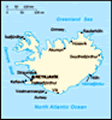
Location: Northern Europe, island between the Greenland Sea and the North Atlantic Ocean, northwest of the UK
Geographic coordinates: 65 00 N, 18 00 W
Map references: Arctic Region
Area: Total: 103,000 sq km land: 100,250 sq km water: 2,750 sq km
Area - comparative: Slightly smaller than Kentucky
Land boundaries: 0 km
Coastline: 4,988 km
Maritime claims: Territorial sea: 12 nm exclusive economic zone: 200 nm continental shelf: 200 nm or to the edge of the continental margin
Climate: Temperate; moderated by North Atlantic Current; mild, windy winters; damp, cool summers
Terrain: Mostly plateau interspersed with mountain peaks, icefields; coast deeply indented by bays and fiords
Elevation extremes: Lowest point: Atlantic Ocean 0 m highest point: Hvannadalshnukur 2,119 m (at Vatnajokull glacier)
Natural resources: Fish, hydropower, geothermal power, diatomite
Land use: Arable land: 0.07% permanent crops: 0% other: 99.93% (2001)
Irrigated land: NA sq km
Natural hazards: Earthquakes and volcanic activity
Environment - current issues: Water pollution from fertilizer runoff; inadequate wastewater treatment
Environment - international agreements: Party to: Air Pollution, Air Pollution-Persistent Organic Pollutants, Biodiversity, Climate Change, Climate Change-Kyoto Protocol, Desertification, Endangered Species, Hazardous Wastes, Kyoto Protocol, Law of the Sea, Marine Dumping, Ozone Layer Protection, Ship Pollution, Transboundary Air Pollution, Wetlands signed, but not ratified: Environmental Modification, Marine Life Conservation
Geography - note: Strategic location between Greenland and Europe; westernmost European country; Reykjavik is the northernmost national capital in the world; more land covered by glaciers than in all of continental Europe
Advertisement
The information here has been derived from Public Domain Sources such as the CIA World Factbook. No liability can be taken for any inaccuracies.
Tot: 0.021s; Tpl: 0.008s; cc: 3; qc: 2; dbt: 0.0027s; 1; m:domysql w:travelblog (10.17.0.13); sld: 1;
; mem: 1.1mb


 Settled by Norwegian and Celtic (Scottish and Irish) immigrants during the late 9th and 10th centuries A.D., Iceland boasts the world's oldest functioning legislative assembly, the Althing, established in 930. Independent for over 300 years, Iceland ...