Australian Geography, Australia Geography
Advertisement
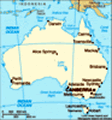
Location: Oceania, continent between the Indian Ocean and the South Pacific Ocean
Geographic coordinates: 27 00 S, 133 00 E
Map references: Oceania
Area: Total: 7,686,850 sq km land: 7,617,930 sq km water: 68,920 sq km note: includes Lord Howe Island and Macquarie Island
Area - comparative: Slightly smaller than the US contiguous 48 states
Land boundaries: 0 km
Coastline: 25,760 km
Maritime claims: Territorial sea: 12 nm contiguous zone: 24 nm exclusive economic zone: 200 nm continental shelf: 200 nm or to the edge of the continental margin
Climate: Generally arid to semiarid; temperate in south and east; tropical in north
Terrain: Mostly low plateau with deserts; fertile plain in southeast
Elevation extremes: Lowest point: Lake Eyre -15 m highest point: Mount Kosciuszko 2,229 m
Natural resources: Bauxite, coal, iron ore, copper, tin, gold, silver, uranium, nickel, tungsten, mineral sands, lead, zinc, diamonds, natural gas, petroleum
Land use: Arable land: 6.55% (includes about 27 million hectares of cultivated grassland) permanent crops: 0.04% other: 93.41% (2001)
Irrigated land: 24,000 sq km (1998 est.)
Natural hazards: Cyclones along the coast; severe droughts; forest fires
Environment - current issues: Soil erosion from overgrazing, industrial development, urbanization, and poor farming practices; soil salinity rising due to the use of poor quality water; desertification; clearing for agricultural purposes threatens the natural habitat of many unique animal and plant species; the Great Barrier Reef off the northeast coast, the largest coral reef in the world, is threatened by increased shipping and its popularity as a tourist site; limited natural fresh water resources
Environment - international agreements: Party to: Antarctic-Environmental Protocol, Antarctic-Marine Living Resources, Antarctic Seals, Antarctic Treaty, Biodiversity, Climate Change, Desertification, Endangered Species, Environmental Modification, Hazardous Wastes, Law of the Sea, Marine Dumping, Marine Life Conservation, Ozone Layer Protection, Ship Pollution, Tropical Timber 83, Tropical Timber 94, Wetlands, Whaling signed, but not ratified: Climate Change-Kyoto Protocol
Geography - note: World's smallest continent but sixth-largest country; population concentrated along the eastern and southeastern coasts; the invigorating tropical sea breeze known as the "Fremantle Doctor" affects the city of Perth on the west coast, and is one of the most consistent winds in the world
Advertisement
The information here has been derived from Public Domain Sources such as the CIA World Factbook. No liability can be taken for any inaccuracies.
Tot: 0.022s; Tpl: 0.007s; cc: 3; qc: 2; dbt: 0.0037s; 1; m:domysql w:travelblog (10.17.0.13); sld: 1;
; mem: 1mb


 Aboriginal settlers arrived on the continent from Southeast Asia about 40,000 years before the first Europeans began exploration in the 17th century. No formal territorial claims were made until 1770, when Capt. James COOK took possession in the name...