Algerian Geography, Algeria Geography
Advertisement
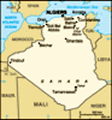
Location: Northern Africa, bordering the Mediterranean Sea, between Morocco and Tunisia
Geographic coordinates: 28 00 N, 3 00 E
Map references: Africa
Area: Total: 2,381,740 sq km land: 2,381,740 sq km water: 0 sq km
Area - comparative: Slightly less than 3.5 times the size of Texas
Land boundaries: Total: 6,343 km border countries: Libya 982 km, Mali 1,376 km, Mauritania 463 km, Morocco 1,559 km, Niger 956 km, Tunisia 965 km, Western Sahara 42 km
Coastline: 998 km
Maritime claims: Territorial sea: 12 nm exclusive fishing zone: 32-52 nm
Climate: Arid to semiarid; mild, wet winters with hot, dry summers along coast; drier with cold winters and hot summers on high plateau; sirocco is a hot, dust/sand-laden wind especially common in summer
Terrain: Mostly high plateau and desert; some mountains; narrow, discontinuous coastal plain
Elevation extremes: Lowest point: Chott Melrhir -40 m highest point: Tahat 3,003 m
Natural resources: Petroleum, natural gas, iron ore, phosphates, uranium, lead, zinc
Land use: Arable land: 3.22% permanent crops: 0.25% other: 96.53% (2001)
Irrigated land: 5,600 sq km (1998 est.)
Natural hazards: Mountainous areas subject to severe earthquakes; mudslides and floods in rainy season
Environment - current issues: Soil erosion from overgrazing and other poor farming practices; desertification; dumping of raw sewage, petroleum refining wastes, and other industrial effluents is leading to the pollution of rivers and coastal waters; Mediterranean Sea, in particular, becoming polluted from oil wastes, soil erosion, and fertilizer runoff; inadequate supplies of potable water
Environment - international agreements: Party to: Biodiversity, Climate Change, Climate Change-Kyoto Protocol, Desertification, Endangered Species, Environmental Modification, Hazardous Wastes, Law of the Sea, Ozone Layer Protection, Ship Pollution, Wetlands signed, but not ratified: none of the selected agreements
Geography - note: Second-largest country in Africa (after Sudan)
Advertisement
The information here has been derived from Public Domain Sources such as the CIA World Factbook. No liability can be taken for any inaccuracies.
Tot: 0.031s; Tpl: 0.008s; cc: 6; qc: 6; dbt: 0.0084s; 1; m:domysql w:travelblog (10.17.0.13); sld: 1;
; mem: 1.1mb


 After more than a century of rule by France, Algerians fought through much of the 1950s to achieve independence in 1962. Algeria's primary political party, the National Liberation Front (FLN), has dominated politics ever since. Many Algerians in the ...