none Economy, Vatican City Economy
Advertisement
Economy - overview: This unique, noncommercial economy is supported financially by an annual contribution from Roman Catholic dioceses throughout the world (known as Peter's Pence); by the sale of postage stamps, coins, medals, and tourist mementos; by fees for admission to museums; and by the sale of publications. Investments and real estate income also account for a sizable portion of revenue. The incomes and living standards of lay workers are comparable to those of counterparts who work in the city of Rome.
GDP:
GDP - real growth rate:
GDP - per capita:
GDP - composition by sector:
Population below poverty line: NA%
Household income or consumption by percentage share: Lowest 10%: NA% highest 10%: NA%
Distribution of family income - Gini index:
Inflation rate (consumer prices):
Labor force: NA
Labor force - by occupation: Essentially services with a small amount of industry; note - dignitaries, priests, nuns, guards, and 3,000 lay workers live outside the Vatican
Unemployment rate:
Budget: Revenues: $245.2 million expenditures: $260.4 million, including capital expenditures of NA (2002)
Industries: Printing; production of coins, medals, postage stamps; a small amount of mosaics and staff uniforms; worldwide banking and financial activities
Industrial production growth rate:
Electricity - production: NA kWh
Electricity - production by source:
Electricity - consumption: NA kWh
Electricity - exports: 0 kWh
Electricity - imports: NA kWh; note - electricity supplied by Italy
Oil - production:
Oil - consumption:
Oil - exports:
Oil - imports:
Oil - proved reserves:
Natural gas - production:
Natural gas - consumption:
Natural gas - exports:
Natural gas - imports:
Natural gas - proved reserves:
Agriculture - products:
Exports:
Exports - commodities:
Exports - partners:
Imports:
Imports - commodities:
Imports - partners:
Debt - external:
Economic aid - recipient: None
Currency:
Currency code:
Exchange rates: Euros per US dollar - 0.8054 (2004), 0.886 (2003), 1.0626 (2002), 1.1175 (2001), 1.0854 (2000)
Fiscal year: Calendar year
Advertisement
The information here has been derived from Public Domain Sources such as the CIA World Factbook. No liability can be taken for any inaccuracies.
Tot: 0.042s; Tpl: 0.007s; cc: 3; qc: 10; dbt: 0.0115s; 1; m:domysql w:travelblog (10.17.0.13); sld: 1;
; mem: 1.1mb


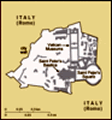
 Popes in their secular role ruled portions of the Italian peninsula for more than a thousand years until the mid 19th century, when many of the Papal States were seized by the newly united Kingdom of Italy. In 1870, the pope's holdings were further c...