Saint Lucian Geography, Saint Lucia Geography
Advertisement
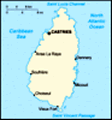
Location: Caribbean, island between the Caribbean Sea and North Atlantic Ocean, north of Trinidad and Tobago
Geographic coordinates: 13 53 N, 60 68 W
Map references: Central America and the Caribbean
Area: Total: 616 sq km land: 606 sq km water: 10 sq km
Area - comparative: 3.5 times the size of Washington, DC
Land boundaries: 0 km
Coastline: 158 km
Maritime claims: Territorial sea: 12 nm contiguous zone: 24 nm exclusive economic zone: 200 nm continental shelf: 200 nm or to the edge of the continental margin
Climate: Tropical, moderated by northeast trade winds; dry season from January to April, rainy season from May to August
Terrain: Volcanic and mountainous with some broad, fertile valleys
Elevation extremes: Lowest point: Caribbean Sea 0 m highest point: Mount Gimie 950 m
Natural resources: Forests, sandy beaches, minerals (pumice), mineral springs, geothermal potential
Land use: Arable land: 6.56% permanent crops: 22.95% other: 70.49% (2001)
Irrigated land: 30 sq km (1998 est.)
Natural hazards: Hurricanes and volcanic activity
Environment - current issues: Deforestation; soil erosion, particularly in the northern region
Environment - international agreements: Party to: Biodiversity, Climate Change, Climate Change-Kyoto Protocol, Desertification, Endangered Species, Environmental Modification, Hazardous Wastes, Law of the Sea, Marine Dumping, Ozone Layer Protection, Ship Pollution, Whaling signed, but not ratified: none of the selected agreements
Geography - note: The twin Pitons (Gros Piton and Petit Piton), striking cone-shaped peaks south of Soufriere, are one of the scenic natural highlights of the Caribbean
Advertisement
The information here has been derived from Public Domain Sources such as the CIA World Factbook. No liability can be taken for any inaccuracies.
Tot: 0.033s; Tpl: 0.007s; cc: 6; qc: 6; dbt: 0.0084s; 1; m:domysql w:travelblog (10.17.0.13); sld: 1;
; mem: 1.1mb


 The island, with its fine natural harbor at Castries, was contested between England and France throughout the 17th and early 18th centuries (changing possession 14 times); it was finally ceded to the UK in 1814. Self-government was granted in 1967 an...