Zambian Geography, Zambia Geography
Advertisement
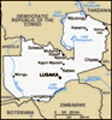
Location: Southern Africa, east of Angola
Geographic coordinates: 15 00 S, 30 00 E
Map references: Africa
Area: Total: 752,614 sq km land: 740,724 sq km water: 11,890 sq km
Area - comparative: Slightly larger than Texas
Land boundaries: Total: 5,664 km border countries: Angola 1,110 km, Democratic Republic of the Congo 1,930 km, Malawi 837 km, Mozambique 419 km, Namibia 233 km, Tanzania 338 km, Zimbabwe 797 km
Coastline: 0 km (landlocked)
Maritime claims: None (landlocked)
Climate: Tropical; modified by altitude; rainy season (October to April)
Terrain: Mostly high plateau with some hills and mountains
Elevation extremes: Lowest point: Zambezi river 329 m highest point: unnamed location in Mafinga Hills 2,301 m
Natural resources: Copper, cobalt, zinc, lead, coal, emeralds, gold, silver, uranium, hydropower
Land use: Arable land: 7.08% permanent crops: 0.03% other: 92.9% (2001)
Irrigated land: 460 sq km (1998 est.)
Natural hazards: Periodic drought, tropical storms (November to April)
Environment - current issues: Air pollution and resulting acid rain in the mineral extraction and refining region; chemical runoff into watersheds; poaching seriously threatens rhinoceros, elephant, antelope, and large cat populations; deforestation; soil erosion; desertification; lack of adequate water treatment presents human health risks
Environment - international agreements: Party to: Biodiversity, Climate Change, Desertification, Endangered Species, Hazardous Wastes, Law of the Sea, Ozone Layer Protection, Wetlands signed, but not ratified: Climate Change-Kyoto Protocol
Geography - note: Landlocked; the Zambezi forms a natural riverine boundary with Zimbabwe
Advertisement
The information here has been derived from Public Domain Sources such as the CIA World Factbook. No liability can be taken for any inaccuracies.
Tot: 0.026s; Tpl: 0.007s; cc: 3; qc: 2; dbt: 0.0075s; 1; m:domysql w:travelblog (10.17.0.13); sld: 1;
; mem: 1.1mb


 The territory of Northern Rhodesia was administered by the South Africa Company from 1891 until it was taken over by the UK in 1923. During the 1920s and 1930s, advances in mining spurred development and immigration. The name was changed to Zambia up...